
Building at the Airport: Piedmont Triad International Airport
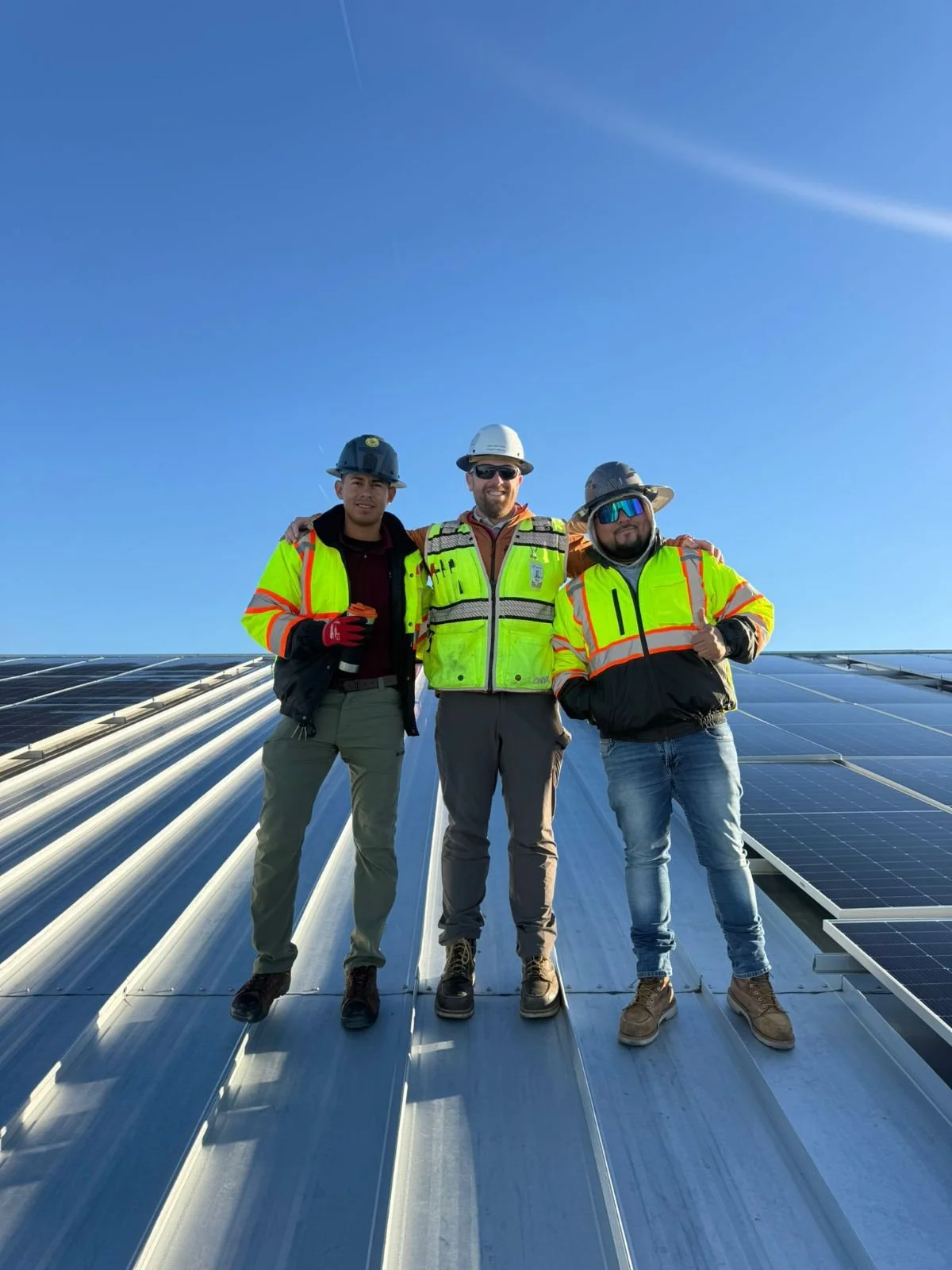
A happy team at the Piedmont Triad International Airport. From left to right, Alexander Mendoza, Pine Energy foreman, Nicholas Baynard, Pisgah Energy Construction Manager, and Nicolas Cantu, Pine Energy Superintendent.
Every job site is a little different. At Pine Energy, we enjoy tackling the diversity of environment that our industry can provide. We're proud to work ground mounts, rooftops, and canopies, and we're proud of our focus on cross-training installers across all types of projects. It makes us skilled and versatile. It also allows employees to stay busy, which is not to be discounted.
In 2025, we enjoyed the complexity of working at the Piedmont Triad International Airport in Greensboro, North Carolina. Airports are not typical job sites. The protocols are stricter. The access is controlled. By the nature of the setting, the schedule must be recalibrated.
In Greensboro, we completed the mechanical and DC scope of work on a 4.6MW rooftop solar installation at the AAR Airframe MRO facility – the buildings where the planes are kept and maintained. The project included 7,770 Qcells 590W modules across multiple rooftops installed on PanelClaw and IronRidge racking systems. We also installed SolarEdge optimizers and the homeruns to 25 SolarEdge inverters. Notably, we did all of this work in compliance with the Inflation Reduction Act prevailing wage and apprenticeship requirements. It was the largest solar project our client, Pisgah Energy, completed to date, and it was our largest rooftop project to date.
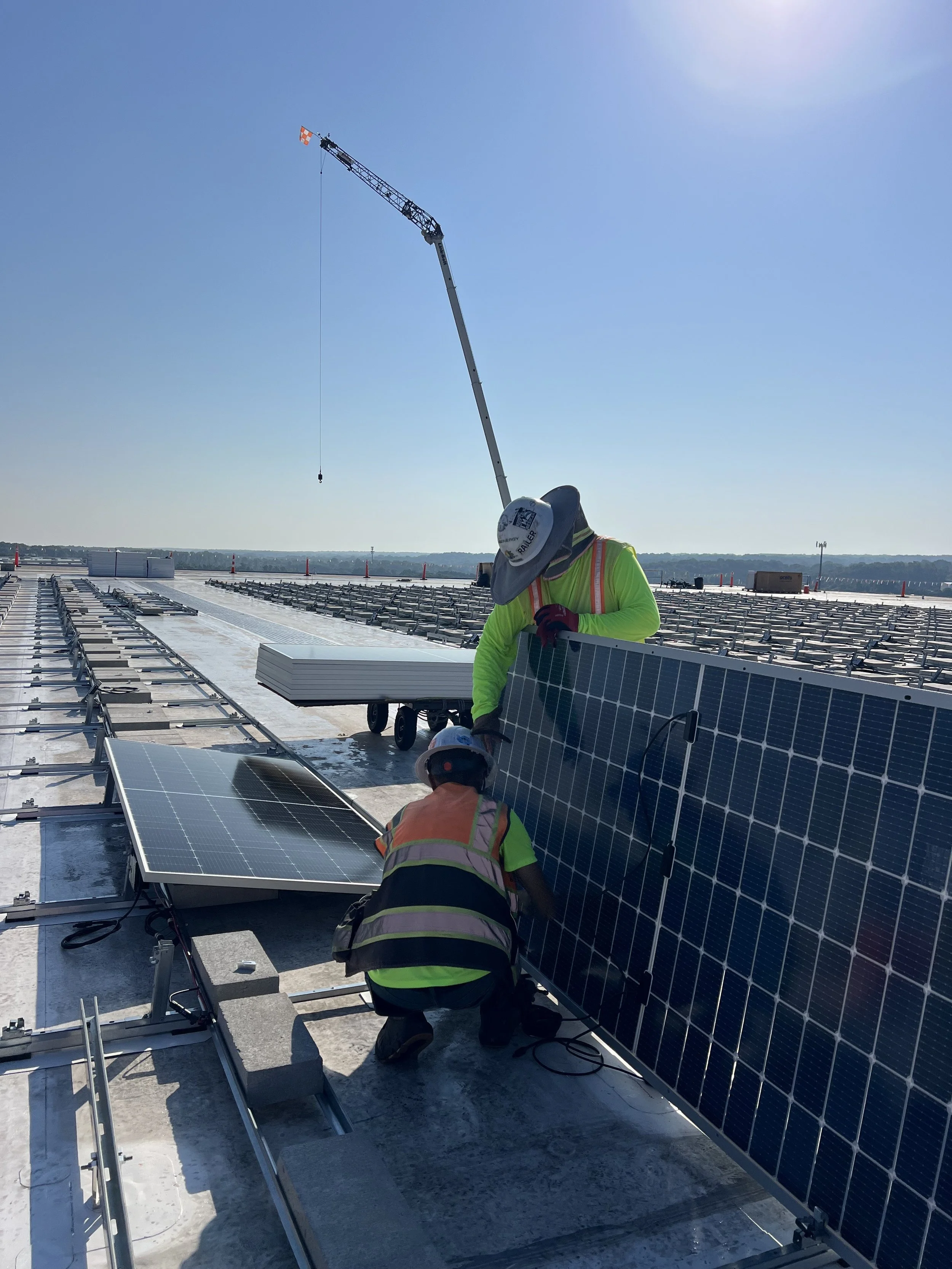
Our project in Greensboro, North Carolina covered TPO and metal roofs.
The AAR Airframe MRO facility was an active aircraft maintenance, repair, and overhaul facility. That meant badged access for every employee. It meant limiting vehicles on site – we parked off site and shuttled our crew to work. It meant working around active operations with the attention and discipline that an airport environment demands. And we limited our impact on those operations.
The rooftops presented their own challenges. Multiple roof levels. Flat TPO surfaces with parapets that served as fall protection. Designated cone zones for deliveries. On Hangar 4 – the highest roof at over 100 feet – we erected a stair tower that our crew climbed every day. Materials were loaded by crane to designated staging locations, with cone perimeters carefully placed to keep the drop zone away from roof edges. The crane operations ran smoothly throughout. The view from the top was something else entirely.
Through all of it, the hangars below kept operating. Planes came in. Planes went out. We stayed out of the way and got the work done.
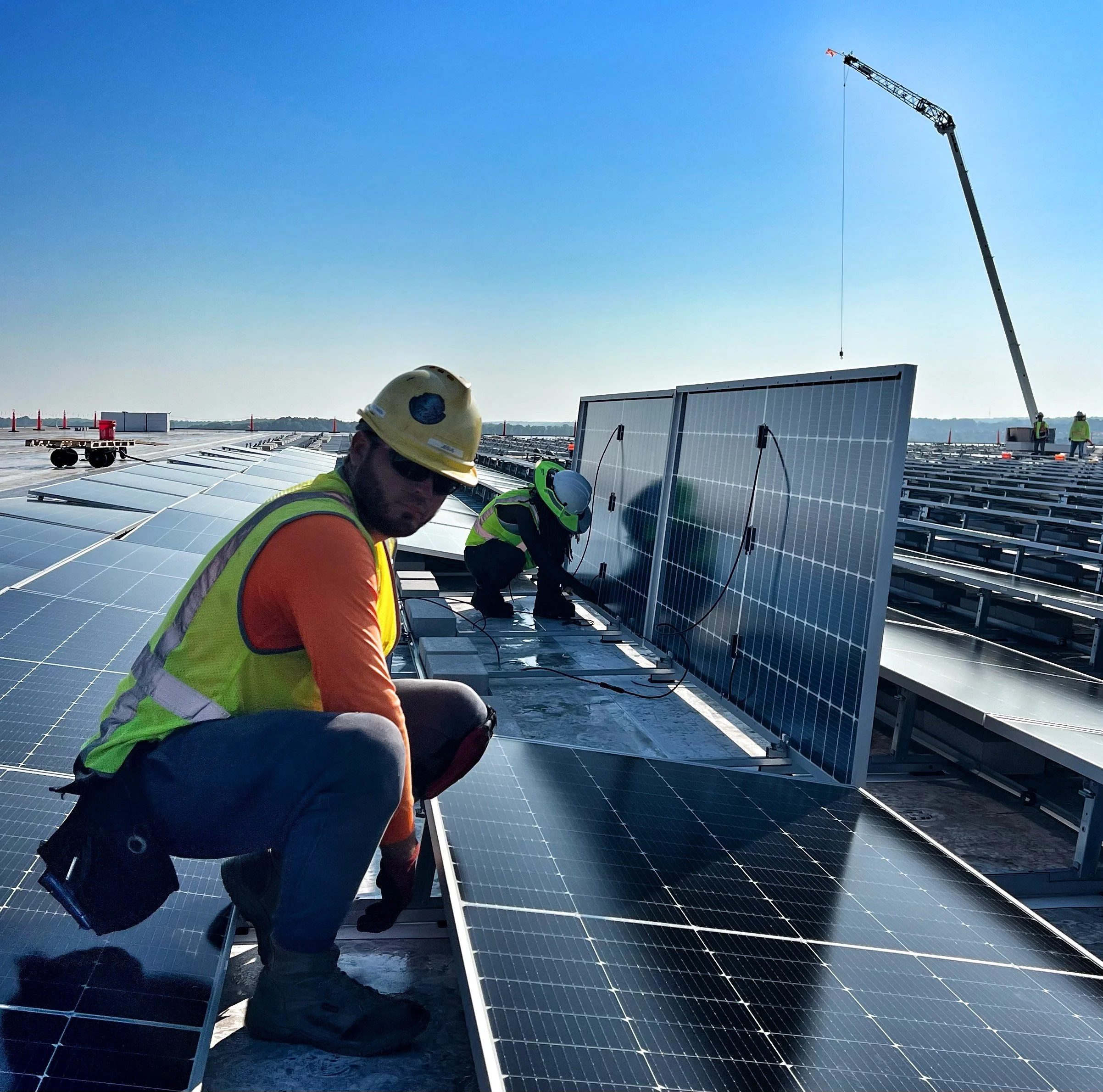
Wire management is serious work.
None of this is standard. All of it is manageable when you've done it before and when your team understands that professionalism isn't optional.
Our project with Pisgah Energy isn't our only airport experience. We have also worked at Hartsfield-Jackson Atlanta International Airport and have additional Hartsfield-Jackson work upcoming.
If you are developing or constructing solar at an airport and need a mechanical and DC subcontractor with demonstrated airport experience, we'd like to talk.
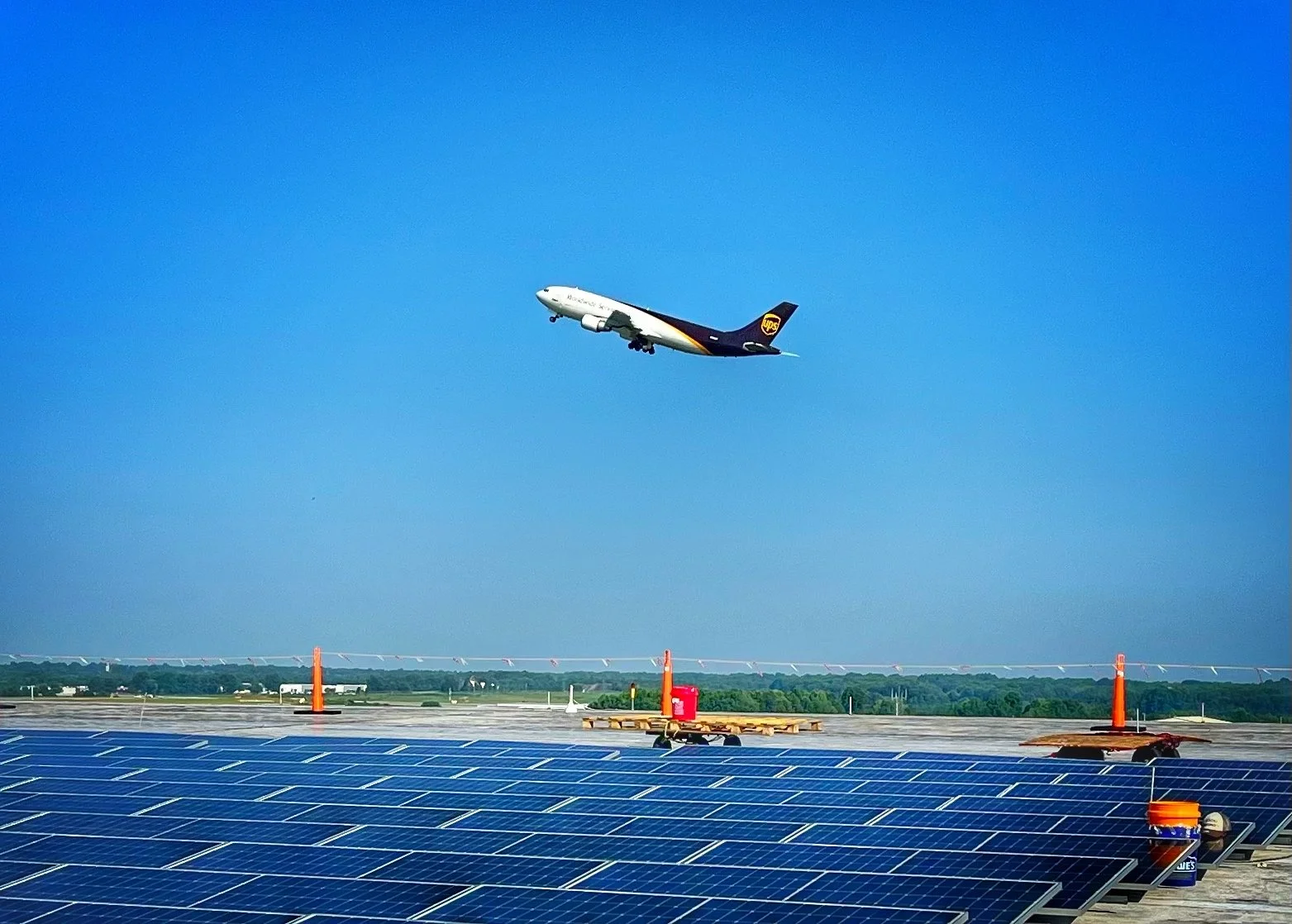
Aircraft operations continued throughout our six-month installation