
Lunch-and-Learn - DC SOW
We recently held our second lunch-and-learn, and this one went deep into the DC scope of work.
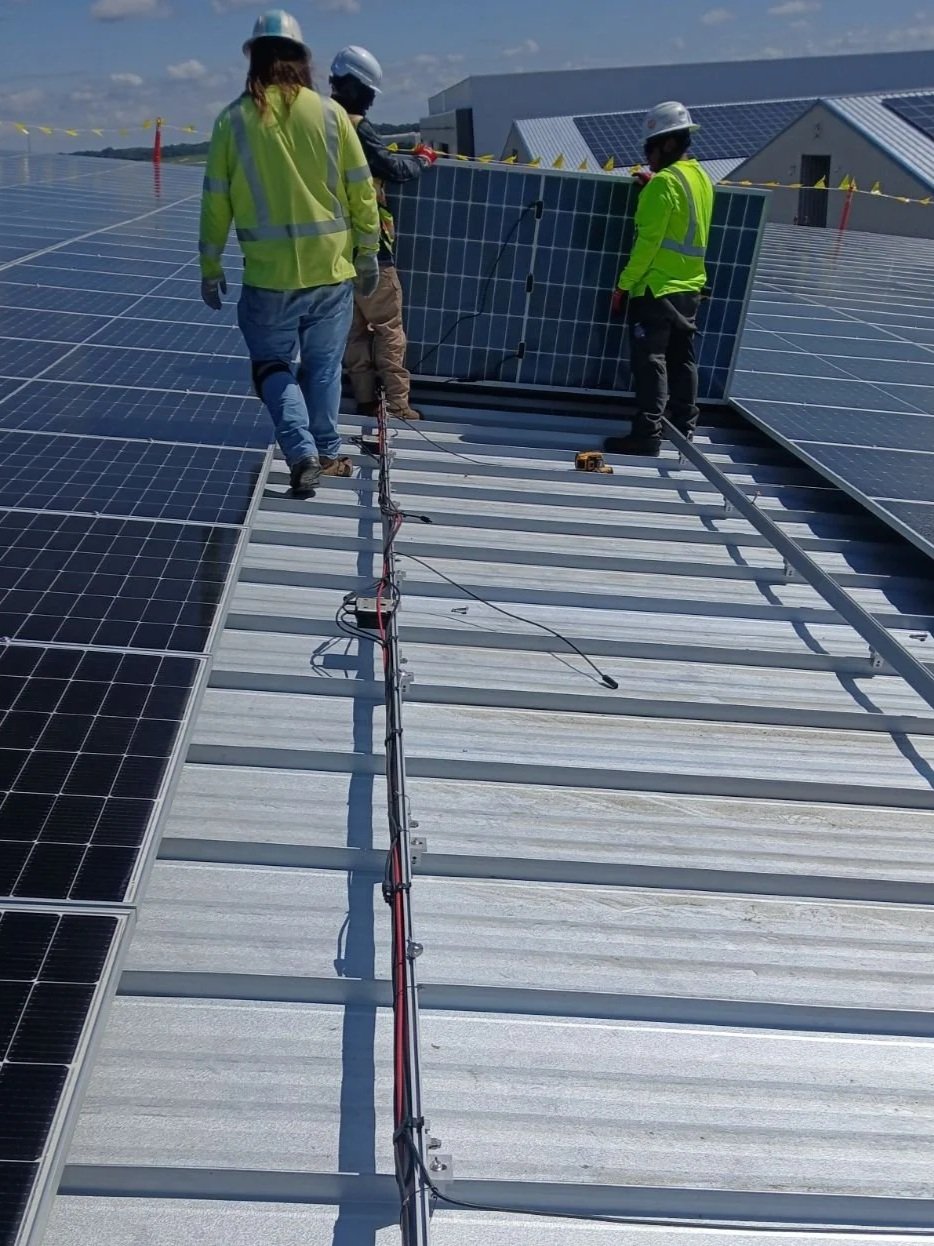
For anyone outside the solar industry, DC stands for direct current. DC is the power that comes out of a solar panel. Typically, we encounter the DC scope of work when we’re on the roof. Besides the racking and the modules, we can install the module-level power electronics, raceways, and homeruns that get to the inverter.
The lunch-and-learn was led by several members of our team: Matias Koski, Preconstruction Manager; Grayson Seelke, Estimator; Shivam Bavishiya, Assistant Project Manager; and Casey Singley, Assistant Project Manager with us. The goal was twofold - teach the entire company about an important part of our work and prepare a presentation that a new hire with little to no solar experience can study.
We covered important topics starting with module-level power electronics, or MLPEs. MLPEs are a small device that sits at each module, performing one or both of two jobs: safety - rapid shutdown - and performance - optimization or conversion. Some jobs use rapid shutdown devices, or RSDs, which handle safety only. Optimizers condition DC power. Microinverters convert DC to AC right at the panel, which changes the conductors from the MLPEs and their destination.
We also discussed homeruns and raceways. The homerun wires carry current from a string of modules to a combiner box or inverter. We run them, protect them with conduit or cable tray, and terminate them. Wire management of the conductors matters - good management keeps the system clean, organized, and serviceable. The presentation showed real examples of both.
We walked through several real projects that we’ve built, and the superintendents of those projects were able to explain the Xs and Os of the work. Different racking systems, different MLPEs, different wire management approaches. We showed a lot of variety because our team has to be comfortable adapting scope to whatever the site requires.
Not everyone at Pine Energy touches DC work. But learning is important in our culture, and the more we can teach and expose our teammates, the more we can count on each other across any project. We’re all better for sharing our knowledge and being well-rounded. That's what the lunch-and-learn was for.