
Toolbox Talk - Cold Weather
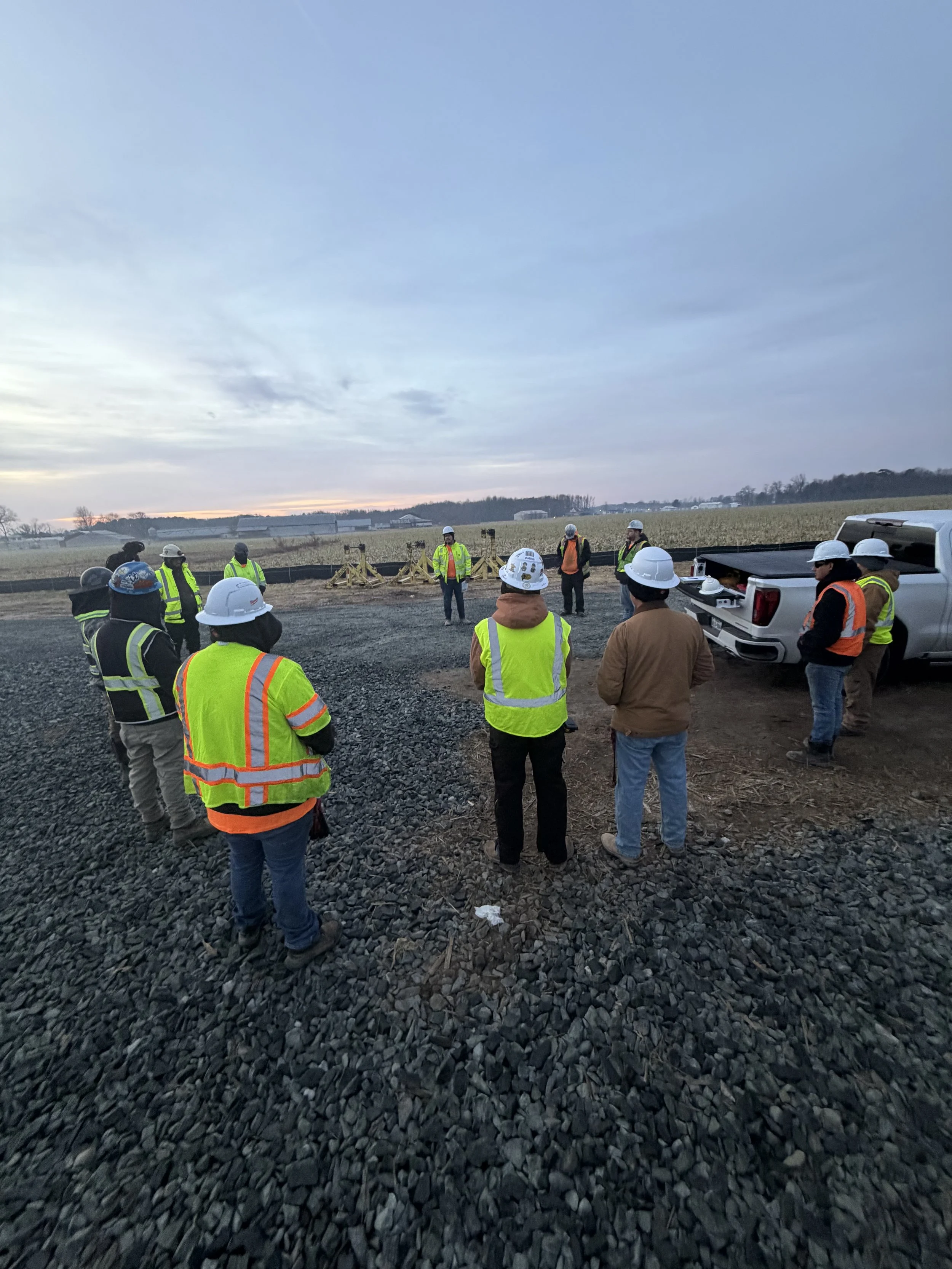
Toolbox talk led by our Superintendent Michael Hernandez in Laurel, Delaware.
Our Assistant Project Manager, Casey Singley, recently redesigned our approach to weekly toolbox talks for 2026. Each week, we’ll hold a talk. We’ll alternate between scripted topics and open forums.
This week, we chose a topic: working in cold weather. With active projects in Delaware and Virginia, it’s a timely and relevant focus.
As we know, cold weather doesn’t usually stop construction work—but it does change it. As temperatures drop, the margin for error narrows. Materials behave differently. People fatigue faster. Small oversights can compound into real safety, quality, and productivity issues.
Cold-related injuries don’t only occur in extreme temperatures. Prolonged exposure to dampness, wind, and cold water can be just as dangerous. Trench foot, frostbite, and hypothermia often develop gradually. Numbness, tingling, slowed reaction time, or confusion can be easy to dismiss in the moment—until they’re not.
That’s why awareness matters. Not just of yourself, but of the people working next to you.
One of the most effective ways to manage cold exposure is also one of the simplest: systems. Wearing the right layers. Choosing materials that continue to insulate when wet. Protecting hands, feet, face, and head. Avoiding cotton in damp conditions. Keeping spare dry clothing available when work clothes get soaked.
None of this is complicated. But it does require consistency.
The same approach applies to work habits. Staying as dry as possible. Taking breaks in warm, dry areas. Drinking fluids regularly. Making adjustments as conditions change throughout the day. Small actions, repeated, reduce fatigue and risk over time.
Cold weather also introduces off-site hazards. Winter travel increases the likelihood of breakdowns and delays. A routine drive can change quickly when conditions deteriorate, and crews should be prepared for those situations as well.
Cold conditions don’t demand a different kind of worker. They demand the same discipline, applied deliberately. Good work in winter isn’t about pushing through discomfort. It’s about preparation, awareness, and habits that hold up when conditions are less forgiving.
This is our topic of the week. We hope you have a safe and productive week on site.