
Toolbox Talk - Skidsteers and Telehandlers
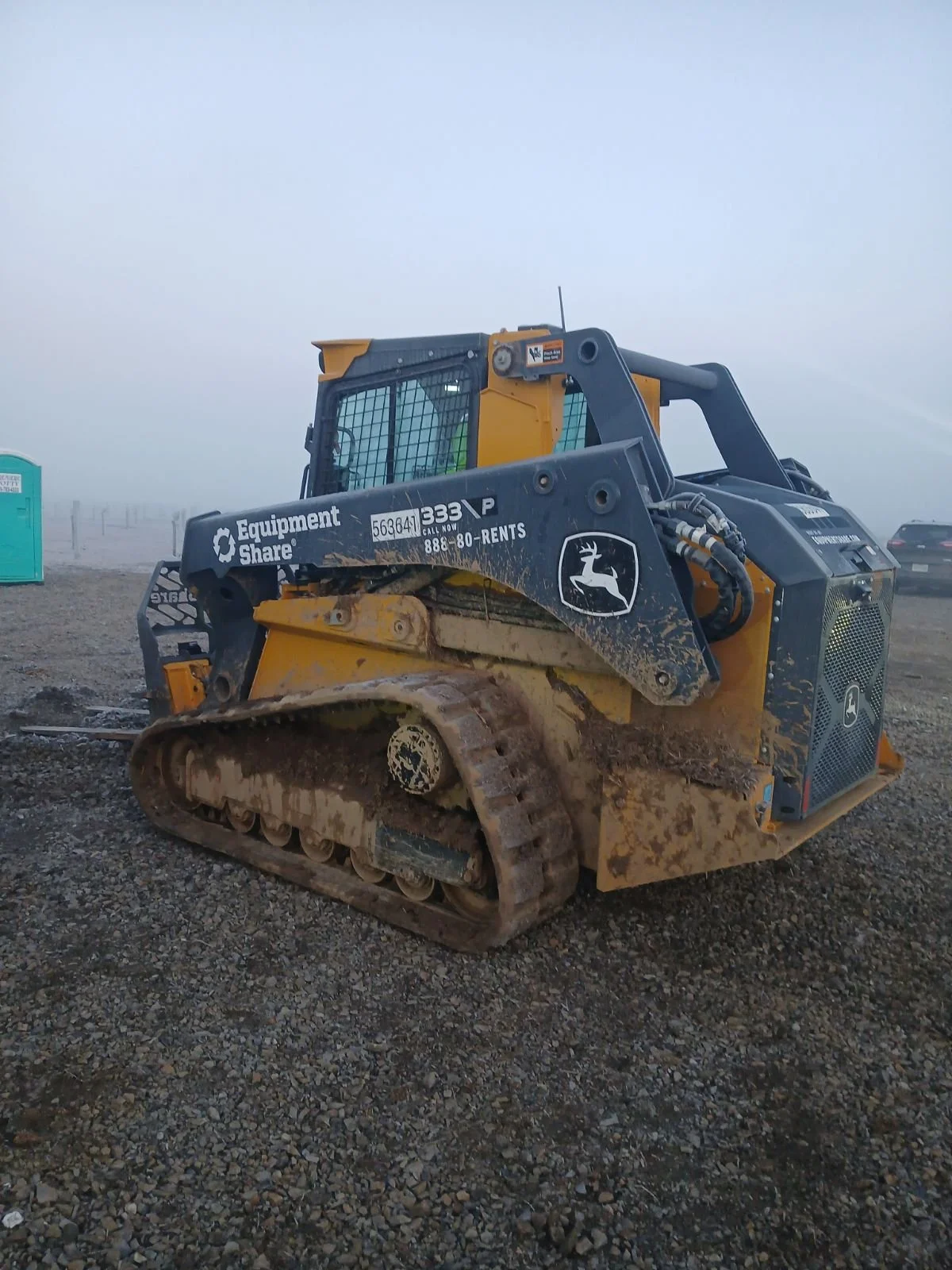
Our skidsteer in Charleston, Arkansas.
This week’s toolbox talk was about safe use of skidsteers and telehandlers, two pieces of equipment we use often.
Skidsteers and telehandlers are a normal part of our solar work. Materials need to be unloaded, staged, and moved, and these machines make that possible. Because they’re common, they can also be easy to underestimate. The reality is that they are heavy, powerful pieces of equipment with limited stopping ability and restricted visibility, especially when operating in tight or active work areas.
One common assumption on jobsites is that pedestrians always have the right of way. While awareness and communication matter, they don’t change physics. A loaded skidsteer or telehandler cannot stop quickly, even when operated correctly. Giving equipment room to operate safely is part of working safely around it.
Positioning matters. Standing between a machine and a stationary object creates a serious crush hazard. Standing in the line of travel creates a strike risk. The safest place to be is off to the side, visible to the operator, and outside the equipment’s path.
Visibility is another key consideration. Buckets, forks, and loads can block an operator’s line of sight, and operators may not see people or obstacles nearby. If it appears an operator does not have clear visibility, speaking up early can prevent an incident before it happens.
Raised booms, forks, and buckets introduce additional hazards. Loads can shift or drop, and no part of the body should ever be placed beneath elevated equipment. Hands should be kept clear of pinch points and moving components.
There are also risks above ground level. Telehandlers and skidsteers operating near overhead power lines can become energized if contact is made. If equipment or a load appears to be approaching overhead lines, the situation should be addressed immediately, and no one should approach equipment that may be energized.
Finally, operating this equipment is not casual work. Only trained and designated operators should run skidsteers and telehandlers. Riding on buckets, forks, or attachments is never allowed and introduces serious risk.
These machines make work possible, but they require attention, awareness, and respect from everyone around them. Small habits—where you stand, what you assume, and when you speak up—make a meaningful difference.
This was our topic of the week. We hope you had a safe and productive week on site.